
Moving Cross Country? Should You Hire Movers Or Do It Yourself?
- What Services Do Professional Movers Provide for Long Distance Moves?
- What Does a DIY Cross-Country Move Really Involve
- Comparison: DIY Move vs Hiring Movers For Cross-Country Relocation
- Hidden Costs of Moving Cross-Country on Your Own
- Quick Look at Risk Factors: Damage, Injuries & Delays
- Common Mistakes People Make When Moving Cross-Country
- Allegiance Van Lines, LLC: Premier Long-Distance & Cross-Country Movers
As far as modern-day grueling experiences go, relocating cross-country has got to be up there. The sheer physical, financial, and emotional toll can’t be overstated! Whether you’re moving as an individual or as a family, the load you have to carry, literally and figuratively, is immense.
Of course, the undertaking is more than just packing a few boxes and driving a truck while listening to some excellent road-tripping tunes. There has to be an almost forensic level of attention given to budget, risk management, and complex (and often complicated) supply chains. Most people tend to arrive at the decision between two options: “Do I do this move myself, or do I hire professional cross-country movers?” Read on further to find out what leverage you can get by hiring a professional and what risks are waiting for you if you attempt a mammoth cross-country move on your own.
What Services Do Professional Movers Provide for Long Distance Moves?
If you think that a professional interstate moving company merely transports items from one location to another, you’d be mistaken. Professional cross-country movers like Allegiance Van Lines, LLC provide an integrated logistics service that specializes in the protection of your assets, optimal use of space, and complicated transcontinental transit routing. More than just organizing the required red tape to move across state lines, they also offer end-to-end services that are designed to eliminate stress and preserve the integrity of your items for the entirety of the journey.
Comprehensive Full-Service Packing and Inventory Management

To begin with, a top-tier moving company will pack your belongings comprehensively and maintain a thorough inventory of all items that have been packed, as well as their condition.
Packing technicians are all certified and make use of the highest-grade packing materials that are engineered especially for long-duration moves and high-vibration environments. We are not talking about cardboard boxes from your local retailers, but thick, double-walled corrugated cartons that are fit for purpose. They will also deploy the use of custom-built wooden crates that cater to high-value assets such as delicate electronics, granite/marble tabletops, and fine art. Further to that, the use of barcoded and digital inventory systems ensures that each item has a traceable and immutable chain of custody from origin to destination.
Advanced Loading, Spatial Optimization, and Securement
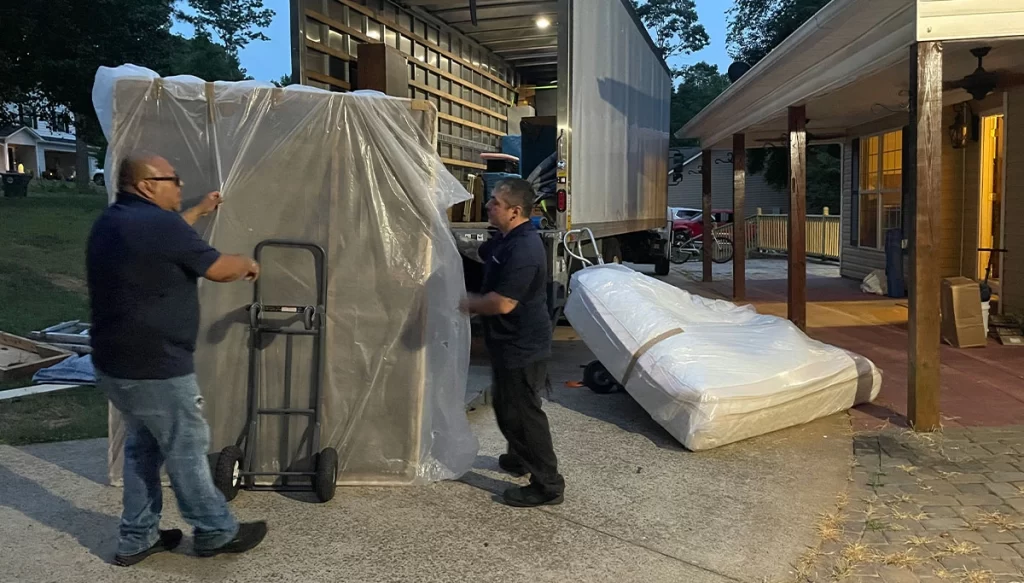
It takes more than just a set of helping hands to load an interstate moving trailer. There’s a requirement to understand the center-of-gravity that each trailer should have, as well as special engineering knowledge to distribute the weight evenly. So it’s not only knowing where to pack items that is essential, but also how to pack them and what they should be next to to have the safest, most well-balanced load possible.
These professional and trained moving crews use custom loading techniques that create tight interlocking structural tiers that prevent cargo from shifting during the move. Throughout the process, cross-country movers will make use of non-marking moving blankets tied down with high-tensile straps and compressed by logistic partitions that are integrated into the trailer to lock the load completely in position.
Dedicated Long-Haul Transportation and Compliance Logistics

Hauling items across state lines involves very strict regulatory and physical challenges. Professional cross-country movers make use of specialized vehicles as part of their fleet. The use of Class 8 tractors (sometimes affectionately referred to as “Big rigs”) coupled with 53-foot air-ride trailers that are designed purely to reduce the effect of road vibrations is typical.
Additionally, all drivers are licensed under the Department of Transportation (DOT) as well as the Federal Motor Carrier Safety Administration (FMCSA) regulations. In addition to this, professional hauliers will handle all interstate compliance mandates, which include stopovers at commercial weigh stations and state line checkpoints while adhering to federal Hours of Service (HOS) rules, which help to ensure that your possessions are never delayed by legal or administrative issues.
Flexible Storage-in-Transit (SIT) Options
One of the biggest bones of contention is the misalignment of the timelines between when the origin must be vacated and when the destination must be moved into. Companies like Allegiance Van Lines, LLC have a means to get past this by offering combined moving and storage options to their customers. If there is a need, then a customer can keep their belongings in one of these facilities until the destination is ready to receive them. This can save a heap of wasted time in repeated packing and unpacking of the vehicles and reduce the risk of handling breakages and damage.
What Does a DIY Cross-Country Move Really Involve
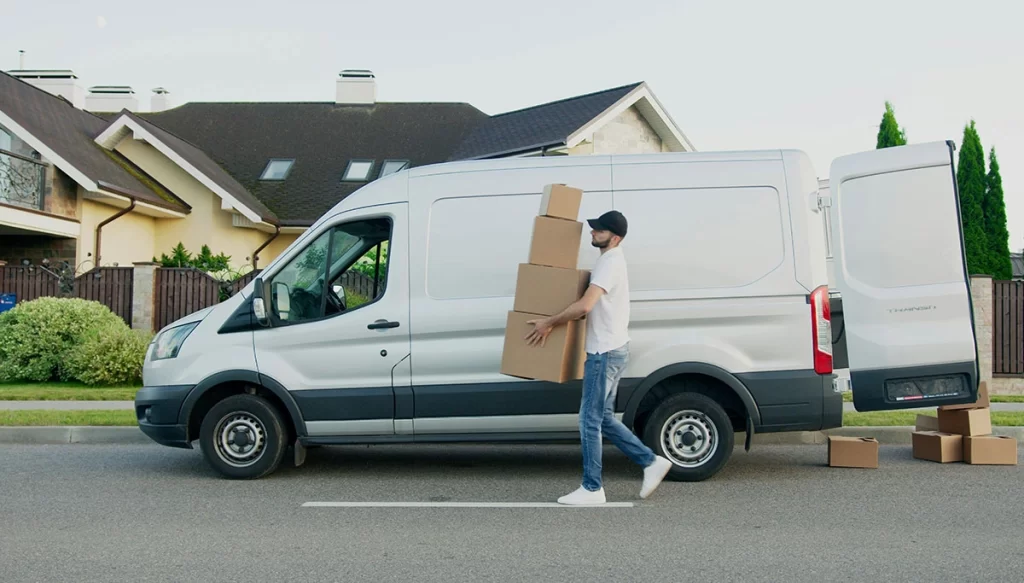
If you decide to move cross-country yourself, that means that you are choosing to single-handedly take on the following roles:
- Logistics manager
- Heavy laborer
- Risk officer
- Long-haul trucker
It can be easy to romanticize a self-move as a classic American road trip, but the truth is unfortunately not as good as the fiction. There are many complexities and operational considerations when moving goods thousands of miles and across state lines, and the process is exhausting and demanding.
Sourcing And Buying Logistical Materials & Tools
If you are thinking of a DIY move, then first take a moment to consider what materials, tools, and mental preparation are needed.
Here’s a small, incomplete list:
- Accurately calculate the cubic footage of the entire household to choose between a 10, 16, or 26-foot truck rental
- Source and buy heavy-duty appliance dollies (rental won’t work because you’ll need them on the other side too!)
- Procure four-wheel furniture platforms
- Buy a minimum of 20 moving blankets
- Find some high-tensile ratcheting cargo straps
The Complex Physical Demands of DIY Packing and Loading
Without standard professional training, a DIY packer must expend significant physical energy and time. You must learn and apply structural packing principles, including but not limited to:
- Boxing items perfectly to the top to prevent crushing
- Wrapping every piece of furniture in protective pads
- Manually disassembling complex beds and modular desks
Loading then becomes a multi-day test of physical endurance. You’ll be required to:
- Lift hundreds of pounds up steep, metallic loading ramps
- Maintain acute structural awareness
- Avoid personal injury or dropped cargo
- Build a secure, tight structural wall within the truck to survive the thousands of miles ahead.
Once loaded, you assume the role of a commercial transport operator. A rental box truck features large blind spots, a wide turning radius, and massive aerodynamic drag. Driving this vehicle across multiple states requires navigating strict height restrictions (low-clearance bridges) and constantly managing fuel stops at accessible commercial plazas.
Additionally, you must adapt your braking distances significantly to account for thousands of pounds of kinetic energy, maintaining safe spacing while managing steep downward mountain grades without overheating the truck’s mechanical braking systems! It really is an entire job on its own!
Comparison: DIY Move vs Hiring Movers For Cross-Country Relocation
Sometimes it’s easier to just have a look at a table when you are making comparisons. Let’s have a look at the specific features of a cross-country move by comparing a DIY move with one facilitated by a reputable professional cross-country mover:
| Feature | Professional Mover | DIY Move |
| Estimates & Costing | All-inclusive once-off contracted estimate | Fragmented and variable costs as the move progresses |
| Physical Exertion | Mover handles all labour | Intense physical exertion during packing, loading, and unloading |
| Timing & Schedule | Highly predictable and punctual, managed by industry software | Delays are common, weather-permitting, and slower driving speeds |
| Ride Quality & Vibration Levels | Industrial air-ride suspension trailers are routinely maintained. Lowest possible vibration levels | The condition of rental trucks varies. No specialized vibration-damping suspension |
| Liability & Risk | Released value or Full value protection of cargo | Customer is 100% liable for physical and vehicular damage |

The main reason that people decide to complete a DIY move over hiring a professional mover is that they want to save money. Unfortunately, there are many hidden costs that the average customer merely does not account for, including but not limited to:
- A tendency to overlook the aggregated costs of sundries and substantial variable expenses
- Hidden costs above and beyond the base rental rate seen on a rental truck windshield
These “unseen” expenses all contribute to a narrowing gap between what you would pay to do the move DIY versus what you would pay professional movers to manage the entire relocation.
Fuel Consumption and Volatile Surcharges
Consumer passenger vehicles are highly efficient compared to commercial box trucks when it comes to fuel consumption. For this reason, many customers tend to underestimate how much fuel will be needed for a cross-country move.
As fuel prices vary across states and gas stations, the average fuel price per gallon is somewhere between $3.80 and $4.50 per gallon. In just fuel costs alone, a novice DIY mover can end up with unbudgeted fuel costs anywhere from $1,350 to $1,600 across a 2,500-mile journey! The volatility of fuel prices can severely affect a tightly managed DIY moving budget.
Lodging, Subsistence & Security En Route
Any long-distance journey by a single driver needs to be broken up into driving chunks of between 8 and 10 hours per trip between sleeps. This extended travel time means that realistically, a journey of 2,500 miles could end up costing 3 to 5 nights’ stay in motels or hotels. Bear in mind that there are also food costs to include along the length of your journey. You also can’t leave the truck containing all your earthly possessions out in parking lots with no monitored security. Either extra equipment needs to be purchased or more expensive hotels need to be booked to benefit from their secure parking options. With larger extra-length trailers, the extra-length parking will also come at a premium price.
Road Tolls, Mileage Overage Fees, and Environmental Levies
Rental agreements frequently include rigid mileage allocations calculated strictly along the most direct highway paths. Any detour taken to bypass traffic, construct a safer route, or visit family triggers costly per-mile overage charges.
In addition to this, commercial toll roads across the country charge significantly higher rates for multi-axle vehicles or trucks with high gross weights. Finally, state line crossings can introduce mandatory environmental or agricultural inspection fees, along with varying state fuel taxes that must be paid directly at the pump.
Quick Look at Risk Factors: Damage, Injuries & Delays
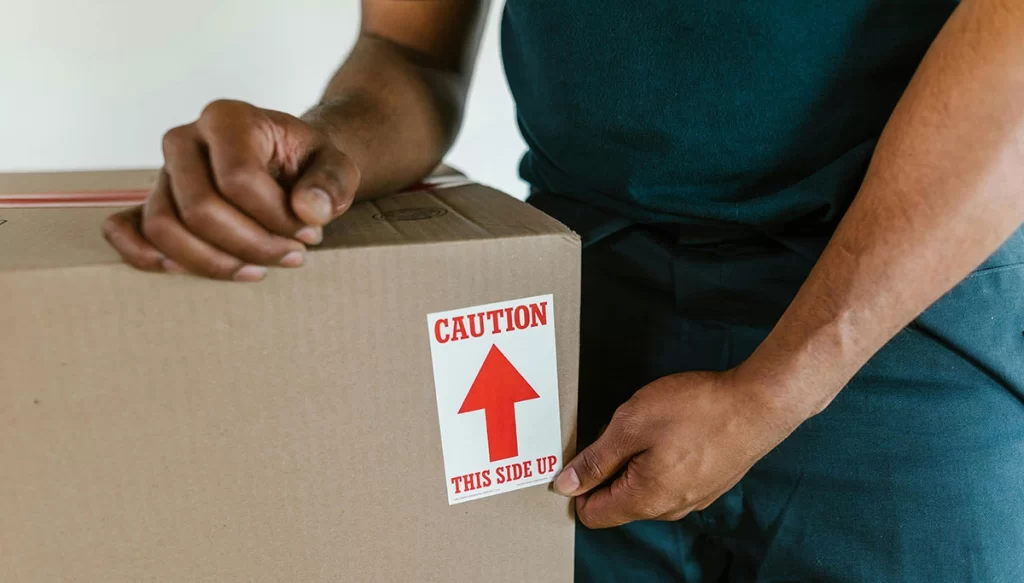
Let’s take a summarized look at some of the risk factors that are associated with attempting a DIY move that you need to be aware of.
Severe Asset & Cargo Damage
Since the suspension is sub-standard and not air-ride, you could end up with damaged goods when you arrive on the other side due to excessive vibrations, shifting during transit, which causes crushed boxes, snapped table legs, marred wood finishes, and irreparable damage to glassware and electronics.
Physical Injury
Since most everyday people are not fully trained nor fully fit to carry such heavy loads, some of the injuries that are common to novice DIY moves gone wrong are:
- Lumbar muscle strains
- Herniated spinal discs
- Severe lacerations from unshielded sharp corners
- Crushed fingers and toes from dropped items
Mechanical Breakdowns
A horrible problem to have with any long-distance journey is the threat of a mechanical breakdown. Unfortunately, these breakdowns don’t seem to occur in heavily populated areas that would make repair easier to achieve. Most often, people get stranded in remote locations with limited cell signal, which means waiting for a good Samaritan to come past and assist may be your only option.
Common Mistakes People Make When Moving Cross-Country
Unfortunately, even with the best of intentions, a lack of experience can lead to some pretty huge planning errors for long-distance relocations. You can save thousands of dollars by avoiding these common mistakes.
Working With Unlicensed Movers
There are a lot of fraudulent movers out there. A licensed mover will be registered with the United States Department of Transportation (USDOT) and will have a valid Moving Company License. Their favorite modus operandi is to offer an unrealistically low initial quotation only to hold your possession hostage midway and demand exorbitant fees to finish the relocation. You should always verify a mover’s credentials against the FMCSA Protect Your Move Database, where all licensed interstate movers are registered.
Not Allowing Enough Time For Packing
It’s not possible to pack a multi-bedroom family home in a single weekend, yet people try this all the time. Be it procrastination or poor time-management, rushed packing leads to poor decision-making in how things are packed and where they are packed. The poor structural integrity ends up causing damage to goods in transit. A well-planned relocation requires a well-thought-out multi-week plan.
Not Specifying The Correct Valuation Coverage
This is a simple error, as most people are optimistic about how the move will go, and so they choose cheaper insurance. They opt for a “Released Value Protection” which only pays out a maximum of $0.60 per pound per item. This would be a disaster if the item damaged was a grand piano! Full Value Protection ensures that the moving company is liable for the full replacement value of any damage caused to your belongings while in transit.
Failing To Prepare For the First Few Days After Arrival
You will arrive at your new home before the moving company does. Always pack a personal suitcase containing multiple changes of clothes, prescription medications, hygiene items, important legal documents, basic tools, and phone chargers to keep you comfortable during your first few nights in your new home.
Allegiance Van Lines, LLC: Premier Long-Distance & Cross-Country Movers
At Alegiance Van Lines, LLC, we strive to provide our customers with the best quality service. We go above and beyond to cater to the specific needs of your moving project. Our clients enjoy a first-class experience through our values of open communication and exceptional service. We begin all relocations by conducting a visual survey to fully understand the logistics and planning that will be required. We offer full-service moving packages that include wrapping and packing, and storage solutions, too. Call us at (561) 210-5120 to book your consultation today.